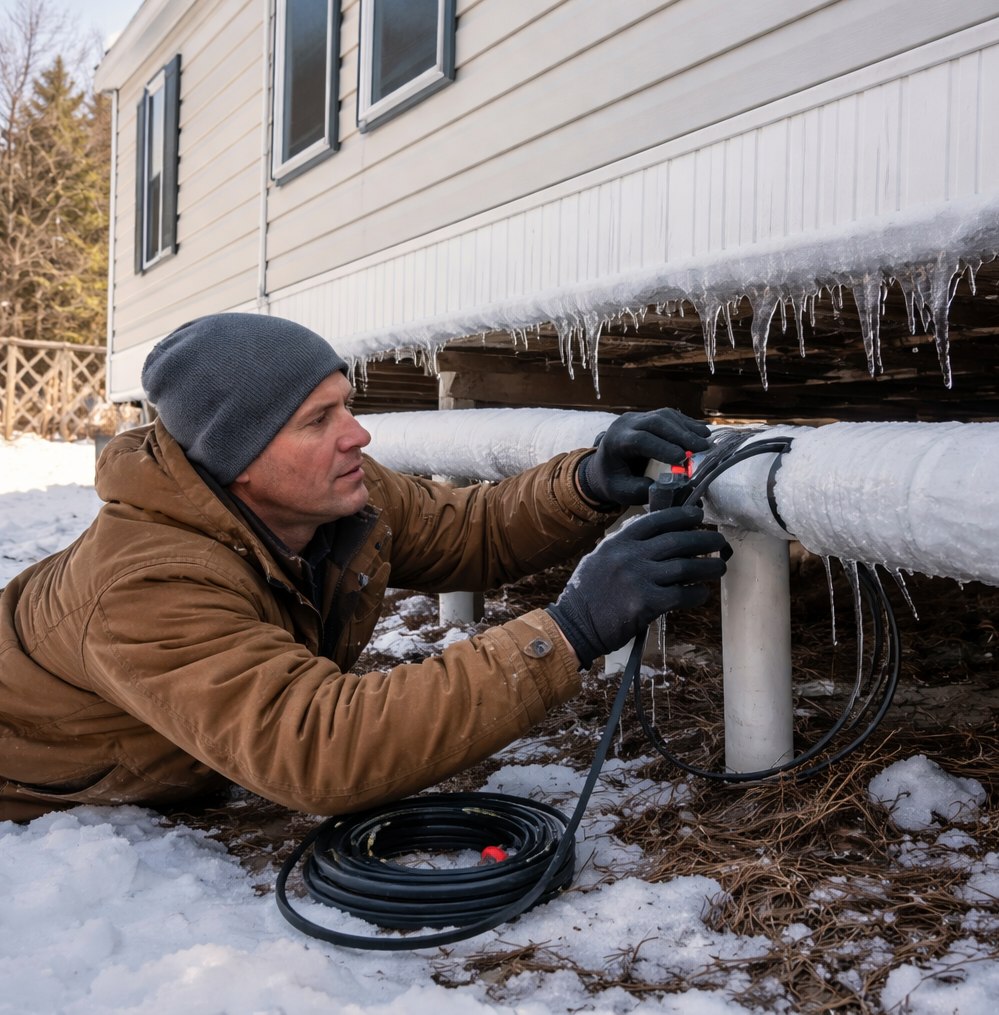
Protect Your Modular Home: Prevent Frozen Pipes with Heat Tape
Winter can be a harsh season for modular and manufactured home owners. As temperatures drop, the threat of frozen pipes looms large. A frozen pipe not only disrupts daily activities but also poses the risk of bursting, leading to costly water damage. If your home has been the victim of this winter menace, understanding how to prevent it is crucial.
One of the smartest investments you can make is installing heat tape. This tool acts as a thermal guard for your pipes, ensuring that water continues to flow even when winter is at its fiercest. But before you rush to wrap your pipes, let’s delve into how this works and the steps to install it effectively.
Understanding Heat Tape
Heat tape is an electrical cable that you apply directly to pipes, providing warmth to prevent freezing. Designed specifically for pipes, it maintains a consistent temperature around the surface. It’s an ideal solution for modular and manufactured homes that often lack the deep foundations and insulation seen in traditional houses.
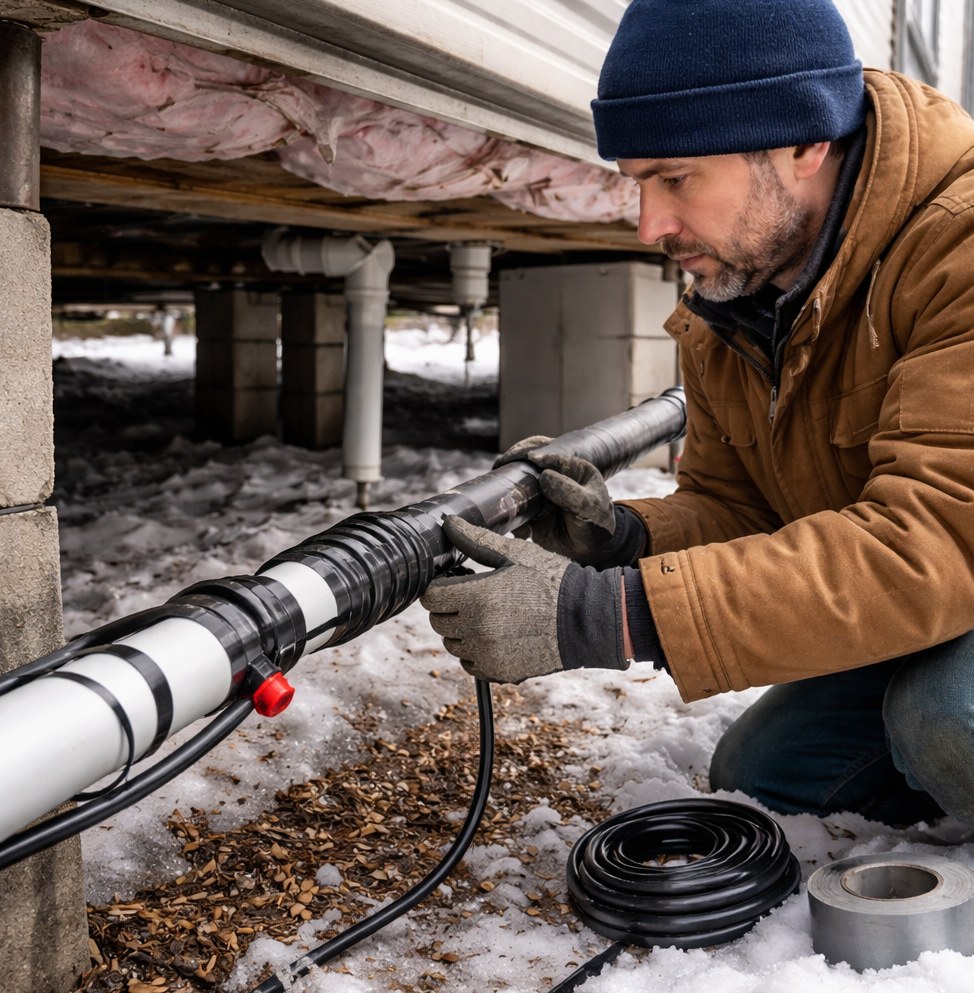
Steps to Installing Heat Tape
- Choose the Right Heat Tape: Not all heat tapes are created equal. Opt for one that’s suitable for your pipe material—whether it’s PVC, copper, or galvanized steel. Also, check if the heat tape is appropriate for indoor or outdoor use, depending on where your pipes are located.
- Insulation Check: Before applying heat tape, inspect your pipes for existing insulation. If old or damaged, replace it to ensure maximum efficiency.
- Measure and Secure: Measure the length of the pipe you’ll cover and cut the heat tape to match. Start attaching the tape from one end, using electrical tape or zip ties to secure it every 6 inches. Ensure that the tape lies flat against the pipe surface.
- Plug in Safely: Once installed, plug the heat tape into a GFCI-protected outlet. These outlets prevent electrical shocks and are recommended for wet areas.
Additional Tips for Preventing Frozen Pipes
While heat tape is a strong ally in the fight against frozen pipes, implementing a few more strategies can offer added protection. First, ensure that your home’s skirting is intact to shield pipes from cold winds. Another useful tactic is to keep a trickle of water flowing through faucets during extremely cold days; moving water is less likely to freeze.
Regular maintenance checks also go a long way. Inspect your pipes and heat tape periodically for any signs of wear or damage. Early detection can save you from bigger headaches down the line. Finally, seal any gaps or cracks around your home that could let in cold air. This step not only aids in pipe protection but also improves your home’s energy efficiency.
In conclusion, as a modular or manufactured home owner, the battle against frozen pipes can indeed be won. By investing in quality heat tape and adopting preventive measures, you can ensure that your plumbing system remains functional throughout the winter months. So, take the initiative today and equip your home against the icy grip of winter.